

The Corpos’ official grid tells you less than any wall does. The city isn’t a map; it’s a living, breathing beast with distinct territories. Where you live defines who you are, what you can get, and how you’re likely to die. Take a walk.
The names are found things. The founders kept what was standing. Sputnik for the dead launch culture whose neon still wires the streets, Chrome for the forges that named themselves every working morning, Rust for what the gate weather does to metal and then to people, Atomic for the ruin nobody names directly. A district called by its cause of death, and proud of it. Sputnik (The Heart)
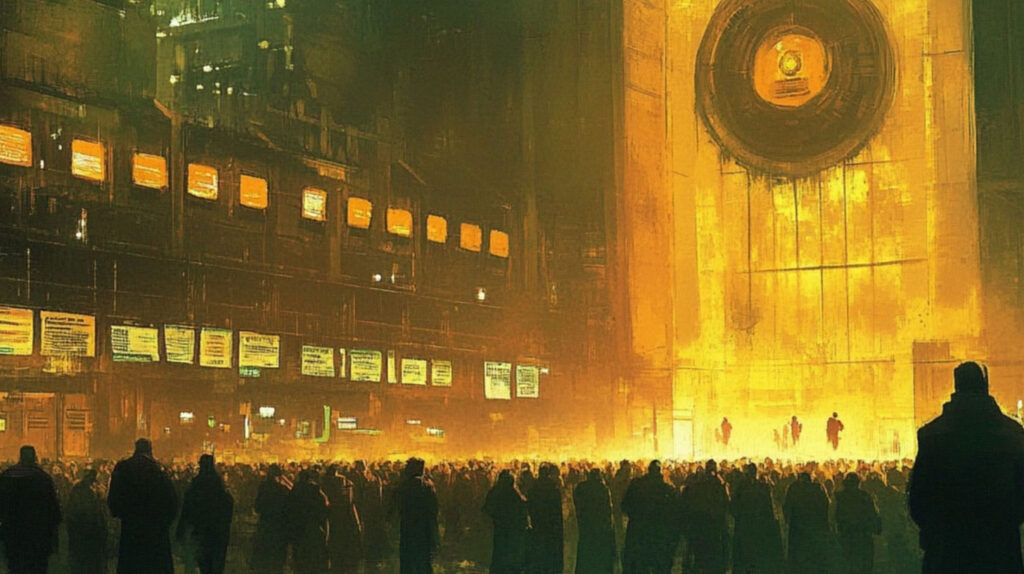
This is the core, where most people live, work, and die. Sputnik is a stack of brutalist towers that blot out the sky, tier on tier. Multi-tiered roadways carve through the buildings, with armored transports rumbling overhead while the lower streets are choked with foot traffic and steam erupting from grates. This is the chaotic, densely packed maze you’ll call home, a constant assault of glowing advertisements, sizzling noodle stalls, and black market clinics operating in damp alleyways. If it can be bought, sold, or stolen in the Bastion, it happens here. This is the pulse of the city.
Chrome (The Lungs)
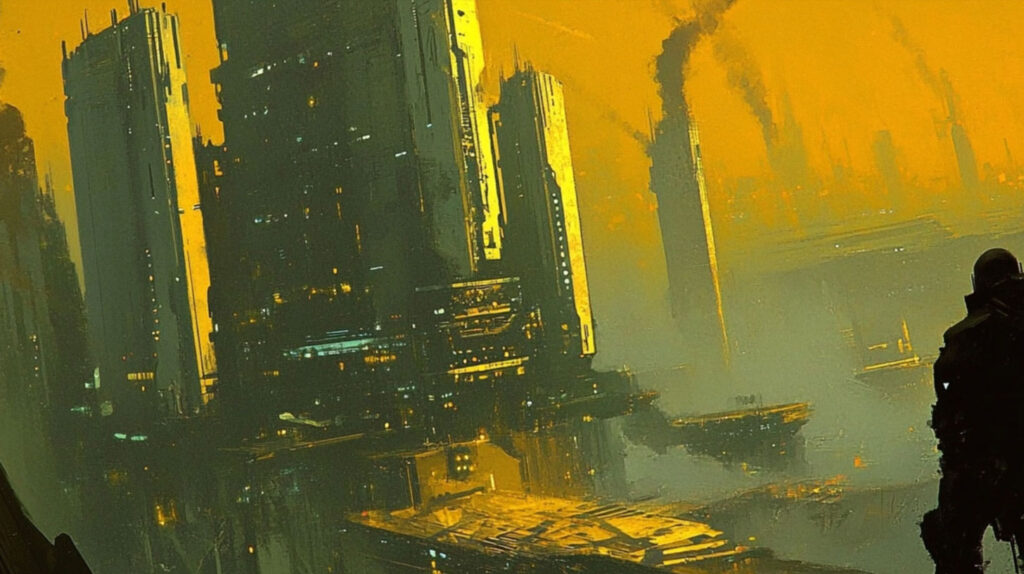
You’ll smell Chrome before you see it. This is the city’s furnace, the industrial sector where colossal smokestacks belch a permanent, amber-tinted haze into the upper atmosphere. This is where the factories scream, the forges burn, and the real heavy work gets done, day in and day out. But when the shifts end, the noise just changes. By night, Chrome is home to the biggest, loudest nightclubs in the Bastion, full of workers trying to deafen the ringing in their ears with synth-music and cheap stims. You come here to earn a living with your hands, or to lose your mind in the noise.
Atomic (The Ghost)
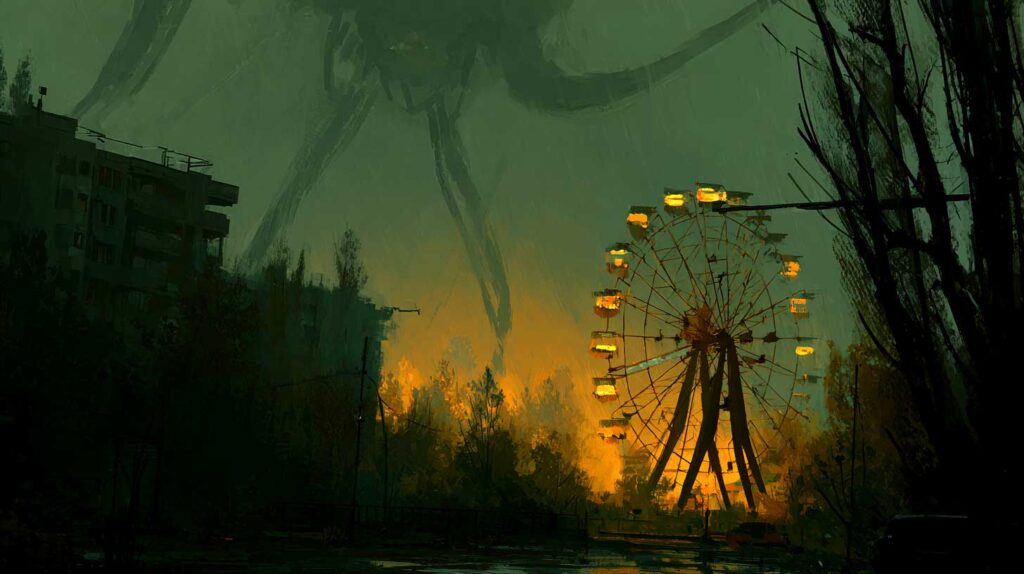
This is Atomic, the skeletal remains of the pre-Fall Atomic Wonderland, and the cheapest ground in the Bastion because the amber never fully clears here. Almost nobody would live here if they had a better number on Monday, so the people who do are the ones who don’t, plus the desperate, the Undertow faithful drawn to the ruin, and the Mnemonics chasing what the ruin remembers. The rent is low for a reason and the reason is airborne. The place is thick with haunting memories and rumors, a place where the barrier between then and now feels thin. They say on a clear night, when the Whispers are loud, you can see the static on the horizon above the ruins flicker with glimpses of the corruption, a stain of impossible darkness rooted into this world and lingers from the day the world broke.
Rust (The Scab)
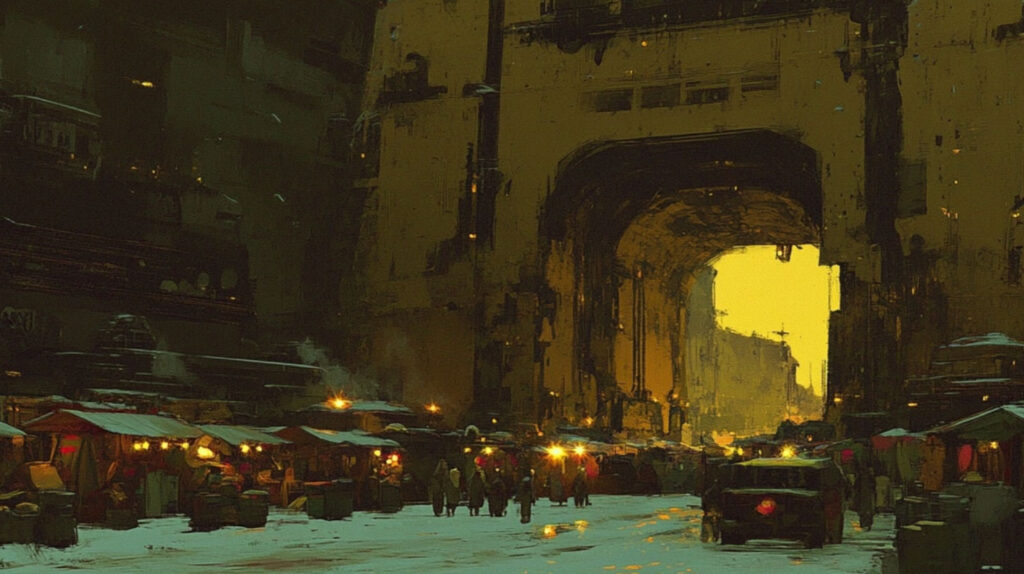
This is the edge of the world. The wound where The Bastion ends and the Wastes begin. Rust is a heavily fortified border district, a chaotic blend of oppressive Civil Authority checkpoint security, sprawling Outlander bazaars, and smoky smuggling dens . It’s where scavenged tech and mutated hides from the wastes get traded for city-made goods and a few hours of warmth. The air here feels thinner, colder, and carries the scent of the vast, dead world just beyond the walls, a constant reminder of what you’re hiding from. This is the last stop for supplies before heading out, and the first taste of civilization when you limp back.
I have lived in three of these. In a manner of speaking.
And each district keeps one law no sign explains. In Sputnik you eat standing still, walking with a bowl is how you lose the bowl, and the counters won’t defend you. In Chrome, work gear has the right of way, a suit waits, a badge waits, everyone waits, and the district remembers who didn’t. In Rust you ask what’s in the bowl, always, because asking honors the hunter, and the one visitor who jokes about it eats alone forever. And in Atomic you don’t say the ruin’s name, don’t ask why the rent’s cheap, and don’t point at the horizon, the locals have stopped explaining the third one.