

The first breath you take in the Bastion is warm, wet, and tastes of ozone and burnt sugar, and it costs you. That warmth is the Grid, a geothermal network Aurora runs off the bore, and your rent is functionally your body temperature. Miss enough Mondays and they turn you down to the ambient of a city built in a permanent winter. Nobody thanks the Grid. Thanks implies a gift, and this is a meter.
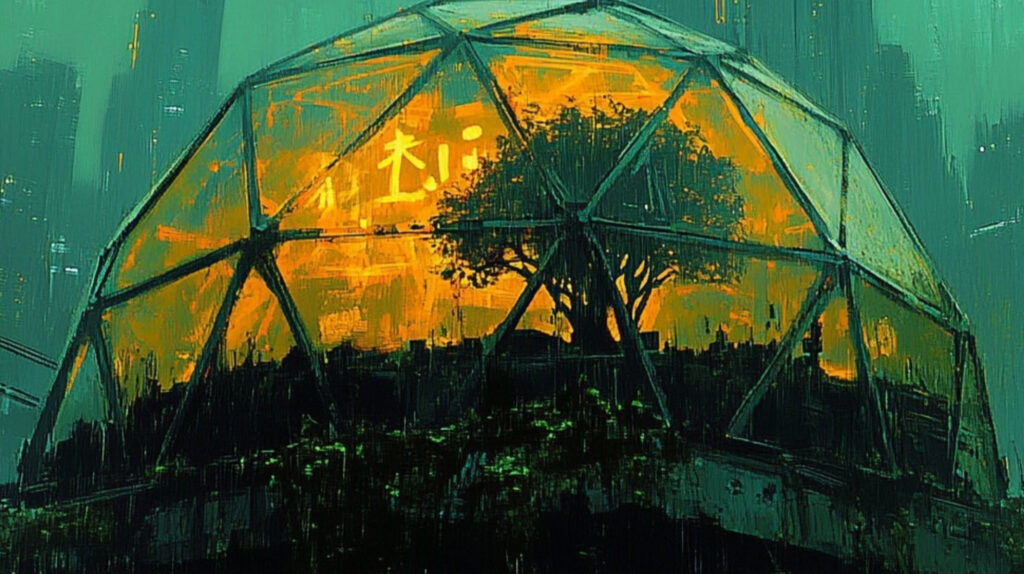
Life runs vertical, a stack of concrete and rust climbing toward a sky it never sees, lit the eternal amber of the vapor lamps, the streets slick with a fine oily rain. Overhead the holograms glide across the towers, a serene Vaulted woman selling a gene-forge, a corporate logo promising security you’ll never afford, beautiful and immense and hollow. And drifting through the upper levels, the Cephalon Scrubbers, the toxin filters, mechanical and slow, trailing purification chemicals from a single amber eye, holding back a poison the city prefers you didn’t think about.

The heat comes with etiquette nobody wrote down and everybody keeps. Touch the conduit before a job. Never whistle indoors. Leave a cup of water out if you work the hot mains, and don’t ask why it’s empty by morning. The Grid belongs to the Tenders, Aurora’s deep guild, who call it her and listen to the pipes before they’re allowed to touch them, and who lately say the pulse has changed. Not faster. Eager. They don’t explain what they mean, and they don’t say it twice.
What the Grid buys you is the whole premise of this book. Warmth here is survival, survival is metered, and everything else, the work, the debt, the citation, the hustle, is what people do to keep the number above zero. The city isn’t a sanctuary and it isn’t a predator. It’s a machine that runs on calories, and you’re a line item that has to keep paying to stay warm. What kind of line item is the only thing you get to choose.
[FEED ENDS. TOUCH THE CONDUIT. DON’T THANK THE GRID.]