

Everyone in the Bastion looks up, at the spires, at the holograms, at the Vaulted riding elevators to air you’ll never breathe. Nobody looks down, which is stupid, because down is where the city actually lives.
One level down, two in the old quarters, and that’s the whole of it. The Bastion was raised on the bones of an older city, the spires footed on pre-Fall foundations, and the gap between the old streets and the new floors is the Sump. It runs widest under Sputnik and Chrome, dead storefronts, station platforms, service halls, dark everywhere and warm wherever the mains pass. Runners live down there, and so does everyone the ledger lost on purpose, heat-tappers, the quiet failed, crews that need a door the CA has never been paid to find. The Interlink’s actual body lives here too, coax bundles thick as your leg, racks sweating ozone in the dark. And below even that, the original bore still turns, First Fire’s machinery, Tender territory, with sealed doors Aurora no longer has keys to and founding-era survey logs the Tenders keep and don’t read aloud, because past a certain depth the logs stop making sense in a way that isn’t damage.
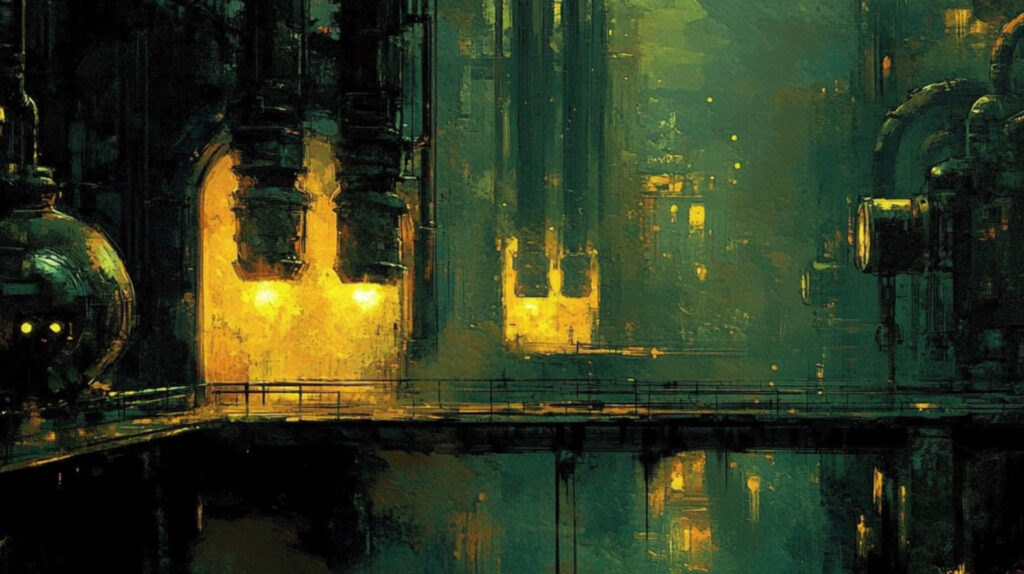
The Tenders are Aurora’s deep-maintenance guild, part union, part order, and the closest thing this city has to a priesthood that actually keeps you alive. They call the Grid “her.” Not it. Her. Initiates spend their first year just listening at the mains before they’re allowed to touch a valve; the saying is, you don’t fix what you haven’t heard. They’re the most reliable people in the Bastion and they will tell you, sober, that she has a pulse, and drunk, that the pulse has been changing. Not hotter. Eager. Then they buy the next round and change the subject, and you let them.
Leave a cup of water out if you work the hot mains. The steam-ghosts are probably nothing, figures in the vapor, tired eyes. The cups are always empty by morning, though. Probably evaporation. It’s hot down there.
[TRANSMISSION END]
Do not take me down to the Root. I will not say it twice.