

The country carries two names and they’re on every chart. Radiate, the near wastes, where the Ribbon runs and a caravan can still make a living. Irradiate, past it, where the charts thin, the relics run richest, and the Riftspawn hold territory. The clans say the second name softer.
The Ribbon. A pre-Fall highway, buried and re-found a hundred times, running out of Rust’s gate toward the old southern cities. It’s the caravan road, the mile markers are shrines now, hung with trade-tokens and the names of the crossing dead, and there are toll customs at the choke points older than the Bastion’s charter. One law on the Ribbon, kept absolutely, you camp beside it, never on it. Nothing has driven the Ribbon in four hundred years. You still don’t camp on it.
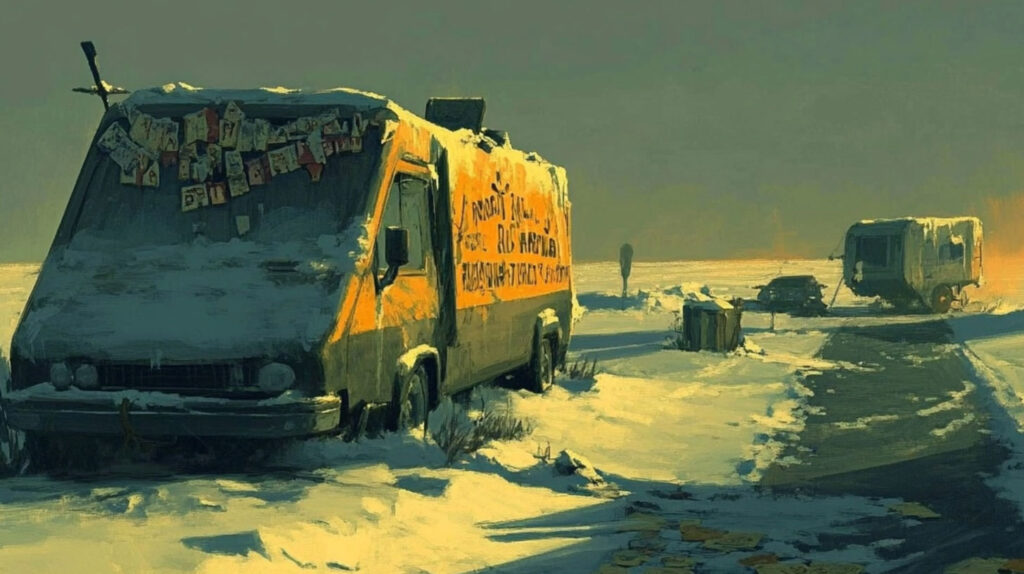
The Glass Taiga. A forest that crystallized mid-season and never finished dying. The leaves didn’t fall; they turned, and in wind the whole country rings, thin and high. On Bloom nights, the taiga lights from within, root to crown. Harvest crews work it for Blight-glass and resin. They work it deaf, by choice, wax and wadding, because the ringing gets into you and the ringing isn’t entirely the wind. The glass sells well in the city and sells strangely, certain fences pay over the odds for the clearest pieces and won’t say who buys them, and a shard-cutter who has handled both will tell you, if pressed and paid, that deep Blight-glass and pre-Fall storage glass look the same under a loupe, and then change the subject.
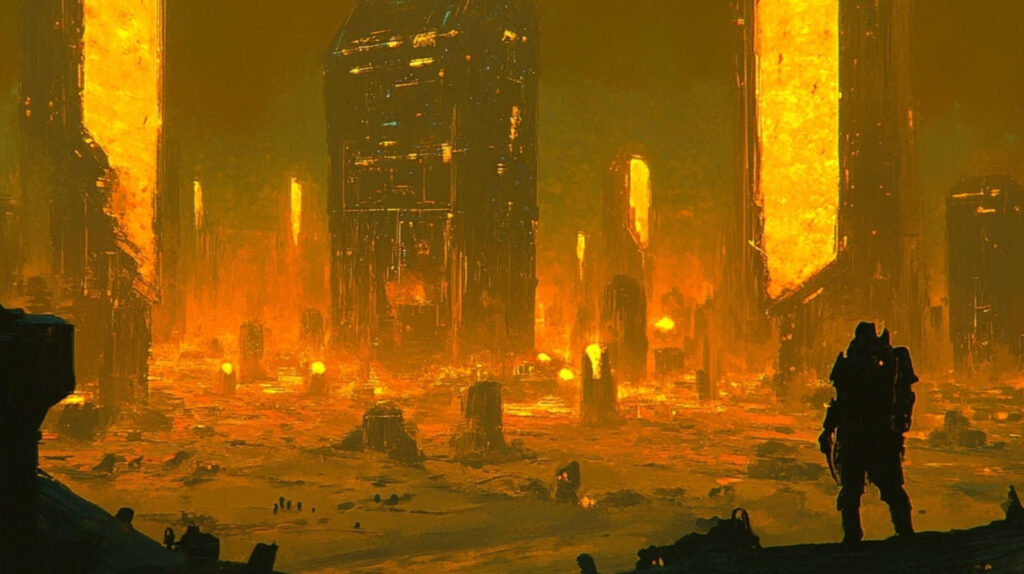
The Sheet. The frozen sea. The Sounding clans work its coast, bore-holes through old ice, lines down into black water, a whole culture of reading the ice the way farmers once read sky. The ice sings before storms, long structural groans, and the Sounders have named the notes and will trade you a forecast for fuel. Below the ice there are lights sometimes, deep and slow and moving, and the Sounders call them lanterns and don’t fish where they pass. It’s also the clean place. The clans give their dead to the quiet water there. See the rites. Respect them or stay off the coast.
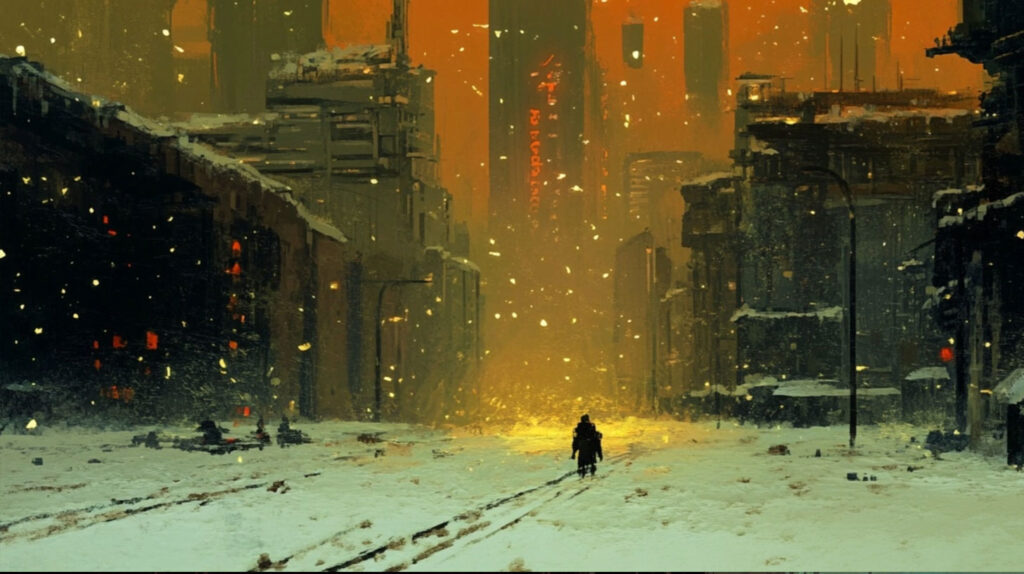
The hearths, and the Hollow Hearth. A hearth, lowercase, is any vent-warmed haven in the cold, a crack in the world’s crust generous enough to keep people alive around it. Hearth-law governs all of them and predates every flag, no blood where heat is shared. Break it and you’re made cold, no hearth will take you, no fire will be built beside yours, and the Wastes settles the sentence on its own schedule. Even the CA keeps hearth-law beyond the walls, though you will never get one to say so on the record. The great one isn’t out here anymore. The Hollow Hearth sits inside the walls now, the covered bazaar in Chrome, kept by a Keeper lineage older than the city, where clan feuds still check their knives at the warm line and the trade tongue does the talking. Its Keepers will tell you the fire moved and the law moved with it, and no clan has ever argued the point. If the Wastes has a capital, it’s a hole in the ground where nobody is allowed to kill you.
The Kneelers. Not on the caravan routes and not on any sanctioned chart. A ring of statues out past Atomic, kneeling around the ground everyone else avoids, limbs jointed wrong, forms fused of tentacle and conduit, half swallowed by the ice. The Undertow says they predate the Fall. Every survey says that’s impossible. No survey team has stayed long enough to settle it.
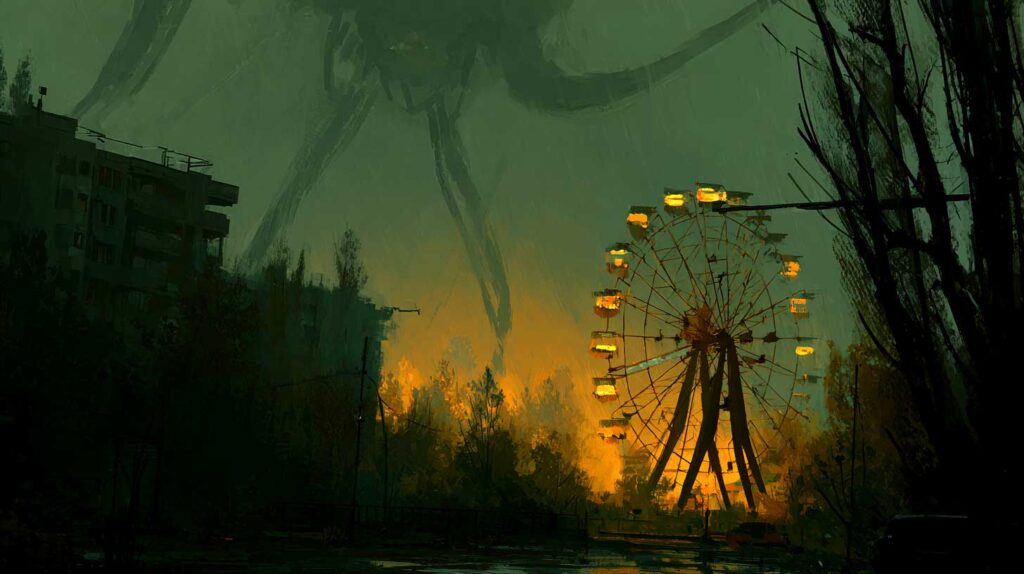
The Amber Garden. The deepest charted reach of the Wastes, and the last chart is old. The Blight ecosystem in full flower, producer, grazer, stalker, all of it, dense as a jungle and lit like a wound. Ascended pilgrimage routes end there. Most pilgrims don’t come back, and the ones who do describe it the way you’d describe a hymn, not a horror, which should frighten you more than the fauna. The last recovered page of Anya Volkov’s journal points into it. The page reads, in full, “The garden is tended. I want to meet the gardener.”
No further pages have been found.
[LOG ENDS]