

The thesis is unpopular for its first sentence. We keep calling the Blight a disease because a disease implies we’re still the host, and the field record supports a worse framing. What operates in the deep country isn’t an infection of our ecosystem. It’s a second ecosystem, complete, functional, and expanding into ours.
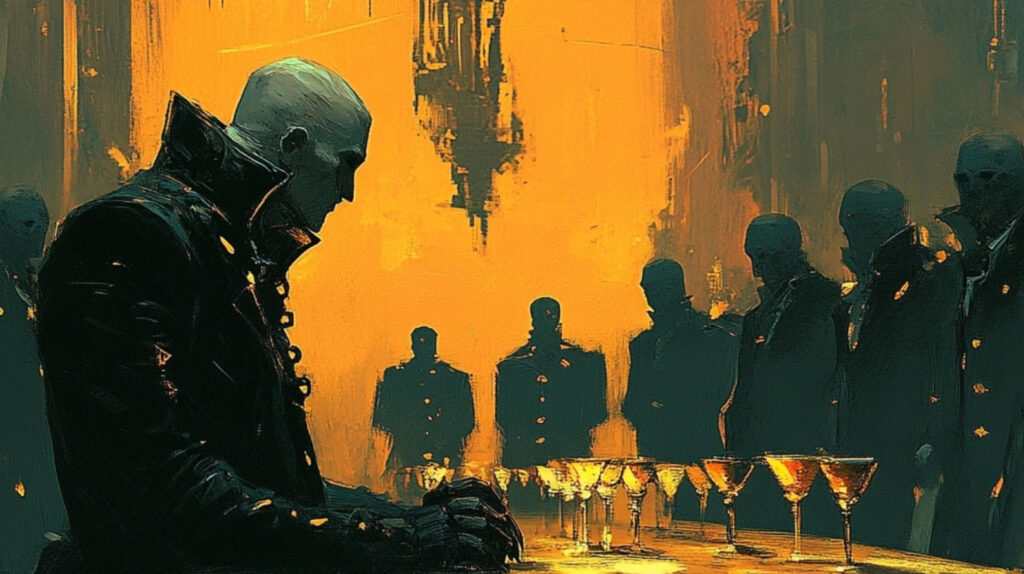
The taxonomy holds under survey. Producers, the converted flora, crystal growths in the shape of trees, the luminous fungi, the Blighted herbs the clans harvest with gloves and sell without them. They don’t photosynthesize. Whatever they draw on, they draw from the heading every instrument points down, and they grow in the dark just fine. Grazers, stags and Scrabblers, feeding on the flora, converting it into biomass the survey teams stopped sampling after the third incident report. Stalkers above them, and above the stalkers, the old saturated forms the codex says to leave. Decomposition closes the loop. Nothing rots out there. It recrystallizes, and the ground it recrystallizes into reads hot for years.

Producers, grazers, stalkers. The pattern holds too well, and everyone who works the deep country eventually asks the question the pattern implies, what is all this metabolism for. The honest answer is that nobody knows. One recovered document argues the whole system is agriculture and we’re the crop, and that document is restricted, disputed, and filed in Book X beside two others that contradict it, which is where this thesis leaves the question. What the field record supports is smaller and worse in its own way. The system is efficient, it’s patient, and every year the charts of where it operates get quietly redrawn outward.
[THESIS ENDS. THE GUILD DECLINED TO ENDORSE IT. THE GUILD DID NOT REFUTE IT.]